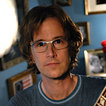








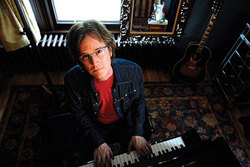
One-time Semisonic front man Dan Wilson has now gone solo and in what could’ve been a better attempt to promote it, he spoke to Undercover.
I say it could’ve been a better attempt to promote it because early on in the interview we realised a shared love of Neil Young’s recent biography ‘Shaky’ and found it difficult to speak to anyone else.We did cover his wonderfully raw solo debut ‘Free Life’, his friend Sheryl Crow and working with the ever-beardy Rick Rubin in the studio (who has also recently read and loved ‘Shaky’).
In twenty minutes on the phone it’s difficult to cover everything, but stay tuned to Undercover shortly after his tour for a full video interview an acoustic performance as he stops by our studios.
Tim Cashmere: Let’s start talking about you. You’ve been making music in different bands now for quite a while. What made you finally decide to go solo?
Dan Wilson: You know, I... I think I’d always had this idea that I would do some kind of solo record, but it never seemed to be the right time for it and maybe I never really had the confidence for it, and it was about 2003 or so Semisonic kinda came to the end of a lot of touring and we decided to stop for a while, and it just became obvious that then was the time for me to start thinking about making a record of my own.
I think that one thing I figured out that I wanted to do was make something that was a lot more naked and acoustic sounding and I probably got very interested in making music in the room as opposed to making music in the computer.
TC: I was actually going to say ‘Free Life’ sounds a little more raw than things you’ve done in the past. Did you feel like you weren’t allowed to do that things before in Semisonic or other bands?
DW: Well yeah, that’s a good question. I think I probably could have tried this kind of sound in Semisonic, but I think I would’ve gotten a lot of resistance from the record label that we had at the time. Probably because I think they had gotten to know us as a hooky loud rock band, so I think it would’ve seemed like a bit unfair to them if we had suddenly turned into a more ethereal super-melodic acoustic band, so it’s probably all for the best.
TC: But surely every band has to evolve as time goes on?
DW: I agree and I actually think if Semisonic had continued to make records, we probably would’ve gone in this direction because I think it was sort of the obvious thing to try. We had delved into the whole computerized thing and we had made a lot of buzzes and beeps and squeaks, and I think it was fun, but it wasn’t where the real soul of making music was.
TC: I hear you were quite inspired by Neil Young’s ‘Shaky’, which is one of my favourite biographies of all time.
DW: Wow!
TC: Well I did really love it...
DW: I loved it too. It’s funny that you should say that, because I thought it was a wonderful book as a drama, just as a book, but it was also so insightful about his motivations. I found it inspiring on a geek musician level, but also just as a story of someone who can’t help himself, he has such incredible integrity. He can’t help himself but to act on it.
TC: So how did you take this on board? Or did you take in on board, or were you just kind of saying that?
DW: I stole a lot of ideas from Neil Young from the book. One of the ideas was that I didn’t want to do an overdubbed heavy layered filled out computer process and reading about Neil Young and his obsession with capturing everything with the musicians all playing together, he also has a very strong flag that he waves for having the singing happen first. You sing with the band and that’s the vocal take. You don’t redo it or anything, you just sing with the band and if the vocal sounds bad, you do the track again. I got so inspired by that and I really tried to take that as far as I could on this album. There are a few that I redid here and there, but I really tried to do it with the whole band.
TC: I can imagine that when you first started out that would’ve been the approach you would’ve taken, if only because of the technology available at the time?
DW: I think the technology has effected people a lot, and a lot of musicians are recording things on Garageband on their laptop, so they almost assume that the only way to record an album is one instrument at a time, and it’s interesting that the idea of recording with everyone in a room together has gone out of everyone’s consciousness. It certainly went out of mine, for a while with Semisonic we assumed that you all play together, then you throw away the bass and the guitar, then you do them alone and you keep the drums and throw everything else away. Nick Launay really helped Semisonic figure out how to all record together and just sound like a band. I think it’s not a new idea, it’s just something I wanted to embrace in a big way... and singing live, I like that.
TC: It’s funny you mention that. This might be a tad overkill, but I am actually recording this interview on Garageband.
DW: [Laughs], I think Garageband is a brilliant invention. It’s taken this whole democratic music thing to an even greater degree.
TC: So you worked with Rick Rubin on this record, which seems like a strange combination to me. How did that actually come about?
DW: It was one of those friend of a friend things. He e-mailed me one day out of the blue. My friend Sheryl Crow e-mailed me out of the blue and said “Rick Rubin wants to talk to you, do you mind if I give him your e-mail address?” and I said “Yeah, of course!” He told me that she had played him a few demos in her car that he really dug and I guess he just thought “This is really great, I want to talk to him,” so the next time I came to LA we talked for like an hour, and for the whole time we talked about the book ‘Shakey’ because we had both just finished reading it.
TC: I’ve heard a lot of things about Rick Rubin and working with him in the studio which could all be hearsay, but is it true that he doesn’t actually spend a whole lot of time in the studio while you’re recording?
DW: Well it was sort of a combination for me and from what I’ve heard I got comparitavely a lot of attention according to some, but he knew from the start that I was going to do a lot of the band recording in Minneapolis, and we knew that he wasn’t going to come to Minneapolis, but a couple of times I went to LA for a week and we did some simple tracking. He’s really into research and development, so he’s really into cutting a different version of a song that you might never use, but you just get a different perspective on the song.
A couple of the songs like ‘Free Life’ we cut out in LA and ‘Cry’ we cut out in LA, but most of the work I did out in Minneapolis. Basically though, the mix, he taught me a lot of things about mixing. Things like ‘This sucks, you gotta start again.” And he really pushed me to make a good sound. That was incredible. I felt like I was going to graduate school for rock recording.
One of the things about Rick is that he looks very intimidating and rough, but he’s actually really gentle and he’s one of the most clear explainers I’ve ever met. When he explains something it’s either slightly ambiguous because he wants to be. He might say something that he leaves open ended, like “It needs a rolling element,” but when he explains something, you know where he’s coming from. He says “Here’s a problem, I want you to find three or four solutions to it, and I’ll come back tomorrow,” and the artist will come up with something that might be better than if Rick just said “Play a D, then a G, then an A” and I think it works, your hand is not getting held.
TC: I’ve heard you talking about the title ‘Free Life’ as summing up the free feeling of making music. Were you trying to write an album that could be summed up in two words, or was the title just an afterthought?
DW: Well, the song has been around for a while and I had thought at first that it was a different kind of song. I thought it was going to be more of a general song about freedom and it was almost a speech about not wasting your time, but it turned into a really personal song and probably for the better. For me it was always the main song, the central song, so when it came time to title the CD, it was really the only idea that stuck at all. Nothing else really seemed to make sense and that made a lot of sense.
TC: And you’re in Australia next month supporting Martha Wainwright, and a couple of headline shows I believe. Do you know what to expect?
DW: Well I’ve been down there a couple of times with Semisonic and I had listened to Martha’s music and actually some concert recordings of hers, so I think I know kind of what to expect, but I’m going to stand bravely with a guitar and sing my songs loudly and proudly and I’ll see what happens.
TC: Well I can tell you that when you and Martha hit Melbourne, I can tell you you’re playing in one of the most beautiful theatres in the world. The beer is usually very expensive and warm, but the room is great.
DW: Ahh, so they put all the money into the room, but then they couldn’t afford a refrigerator.
TC: Well Dan, thanks for speaking to us.
DW: Well thanks Tim. I’m glad you’re a fan of ‘Shaky’. I don’t talk to a lot of people who have read that book for some reason!