







2007 is set to be an "experimental year", with the major record labels toying with the idea of releasing digital music with no copying restrictions.
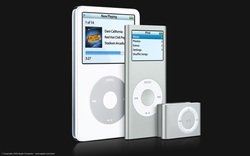
It's one of the key topics being discussed at this year's Midem conference at Cannes, with speculation mounting that at least one of the four majors (Universal, Warner, EMI and Sony/BMG) will begin releasing unrestricted digital files by the end of the year.The majors currently release digital music through the filter of Digital Rights Management (DRM). The DRM system makes it far more difficult for the files to become part of peer-to-peer file sharing networks, however it also restricts the use of the files, creating instances of incompatibility between files and players of different types.
John Kennedy, head of the International Federation of the Phonographic Industry, told the Reuters news agency, "Digital rights management is exactly that, it's the management of digital rights and if we weren't managing it the headlines would be 'irresponsible music industry ... creates anarchy'."
But he also conceded, "Each of the majors is wrestling with the advantages and the disadvantages of going with MP3s without any restrictions at all."
The argument is based around the interoperability of the DRM system, with some arguing that DRM can evolve into an interoperable system, whilst others suggest it is merely holding back the growth of the digital music market.
"You cannot have zero piracy," says Chris Anderson, editor-in-chief of 'Wired' magazine, "and if you try to get to zero piracy you will make the experience of consuming music so painful you'll have zero industry."
With DRM restrictions abolished, a real possibility emerges that all music will eventually be free. The renowned French economist Jacques Attali (author of 'Noise: The Political Economy of Music'), who attended Midem, predicted that the business model of the recording industry will soon mirror the old radio model. He posits that online music would be supported by advertising (and possibly funding), with consumers paying for live performances.
Another school of thought suggests that music would become like a kind of utility, where consumers would pay a low subscription rate for access to music download networks, for use in their home and portable entertainment systems.
Still, all this discussion fails to address the future of the artists themselves. If a majority of their future income is to be gained through live performance, one can't imagine that the industry could support the number of artists we see today.