








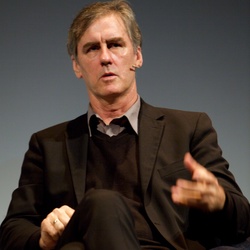
Go-Between, solo artist and writer Robert Forster closes the BIGSOUND conference with a comprehensive walk through his career
In the '60s and '70s, what Forster called "a Golden Era of pop", he discovered music through Brisbane AM radio rather than through his parents or siblings.Not being born into a musical household, he first picked up an instrument in school. He had his first nylon string guitar at 16, and his first electric guitar in University.
In 1978, when he started the Go-Betweens, he'd already been friends with long-time collaborator Grant McLennan. Forster says that he couldn't find likeminded musicians who loved what he loved - "The Ramones just sounded like very primitive, stupid music" - so he taught McLennan bass.
"The great fluke of my life is that. He was a film student and he could've just been a university guy," Forster admitted, "The fact that he was innately musical was an enormous break."
The first show that he saw in Brisbane, in 1974, was Roxy Music. He saw Lou Reed the next year, and saw the same amazing crowd "who'd then just disappear." Same thing happened when Blondie came out and punk broke. Soon enough, that crowd was coming to see the Go-Betweens play.
"When I started writing songs in 1977 and '78, there were 1000 people in this town who could play guitar better than me," he says, "I couldn't compete with those people but I was song-orientated."
He said the second breakthrough following Grant's musical awakening was "that I didn't have to be a virtuoso to write good songs".
Forster credits The Saints as the pioneers and credits the song-writing double of he and Grant as pivotal for the international success of the Go-Betweens, playing each other songs all the way up until Grant died in 2006.
Following the "casting" idea of Grant, Forster admitted that he wanted a woman in the band before he found Lindy Morrison.
He admits the most memorable moments were, "Listening to an album that you've finished, late at night, it's always a pleasure. That's something that sticks in my head, sitting in studios late at night, listening to our work."
But the band were certainly aiming for fame, Forster enthusing, "We were up for the world championship! We wanted the full pop star trip. We were ready."
When the Go-Betweens broke up the first time, Forster admitted that it was a joint decision between himself and Grant. "It was enough. It's never been a decision that I've regretted," he said, and cheered Powderfinger's recent decision to close their chapter.
The band's ten-year hiatus and three-album reformation was "a great thing" as they got more fuel to write and experiment. "The music had moved on," he said, "but for me, I was in my early to mid-40s, back in Brisbane, and was thinking: what's that going to release in me?"
Forster utilised some of McLennan's unreleased songs for his critically-acclaimed 2008 album The Evangelist. Forster said that before he died Grant had hit another purple patch of writing. "Grant was so excited, and I went to his house at night and he just played me songs. And when he passed away, I was the only one who knew these songs, so I had to record them."
He says he'll never make an album like The Evangelist again. "It's very much part of the end of that era." He now says he's at the fourth stage of his career, following the two Go-Betweens eras and his solo decade.
Forster's writing career, at The Monthly since 2005, he says "is a great joy" and that he had been concocting reviews in his mind for decades, "I was always very analytical."
He admits he's hearing more new music now that he has since the '70s. He dismissed the nostalgic attitude of saying nothing decent has been released since the days of the Stones and the Bseatles as "stifling and silly".
After producing new bands Halfway from Rockhampton and the John Steel Singers from Brisbane, he says "A side benefit for me is to go into a younger world. I hear what they're listening to and talking about."
"It's great for me to work with people who are younger," he enthused, "It's fascinating. I ask them 'Play me every song you've got'."