








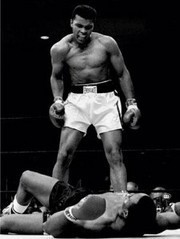
A new book has suggested that boxing great Muhammad Ali sowed the seeds of rap lyricism in African American culture.
Titled 'Ali Rap: Muhammad Ali the First Heavyweight Champion of Rap', the book explores the development of Ali's legendary taunts and rhymes. Even as a twelve-year-old growing up in Kentucky, Ali was using his quick mouth as an outlet to express his famous confidence - "this guy is done, I'll stop him in one" said the young Cassius Clay.Hip-hop developed in the South Bronx during the early '70s, but as the book's editor George Lois explains, "Before there was rap ... there was Ali Rap ... a topsy-turvy, jivey jargon that only Ali could create, but a language we could all understand."
In the same way hip-hop, in its pure form, tackles social and political issues, Ali used his sharp tongue to speak out against racism and the Vietnam war. As such, many respected rappers are supporting the claim that Ali is indeed a true rap heavyweight.
Public Enemy's Chuck D said during a recent ESPN documentary, "[Ali] was able to engage his social surroundings into his whole persona. That's what hip-hop was able to do - to be an antenna for social reflection. He's one of the few black people to get on TV in the '60s and speak their minds - thank God - and also back up what he talked about."
With rap music having been appropriated by the traditionally white notions of money, power and subjugation, Chuck D went on to argue that the next generation of rappers should be looking to people like Ali for motivation and inspiration.
"It was important to the early rap artists and DJs to understand and tie into Muhammad Ali's persona and brilliance," says the Public Enemy mouthpiece. "The further we got away from that and the further away we get from history, hip-hop and rap seemed to form its own sort of story - which is not always good to get away from the reasons you were doing it in the first place."